Controlled imaging
Purpose-designed lighting, camera position and product presentation improve repeatability.
OCR, OCV & variable print verification
Verify that the right code is present, legible and correct before the product leaves the line. Failed packs are positively tracked and rejected.
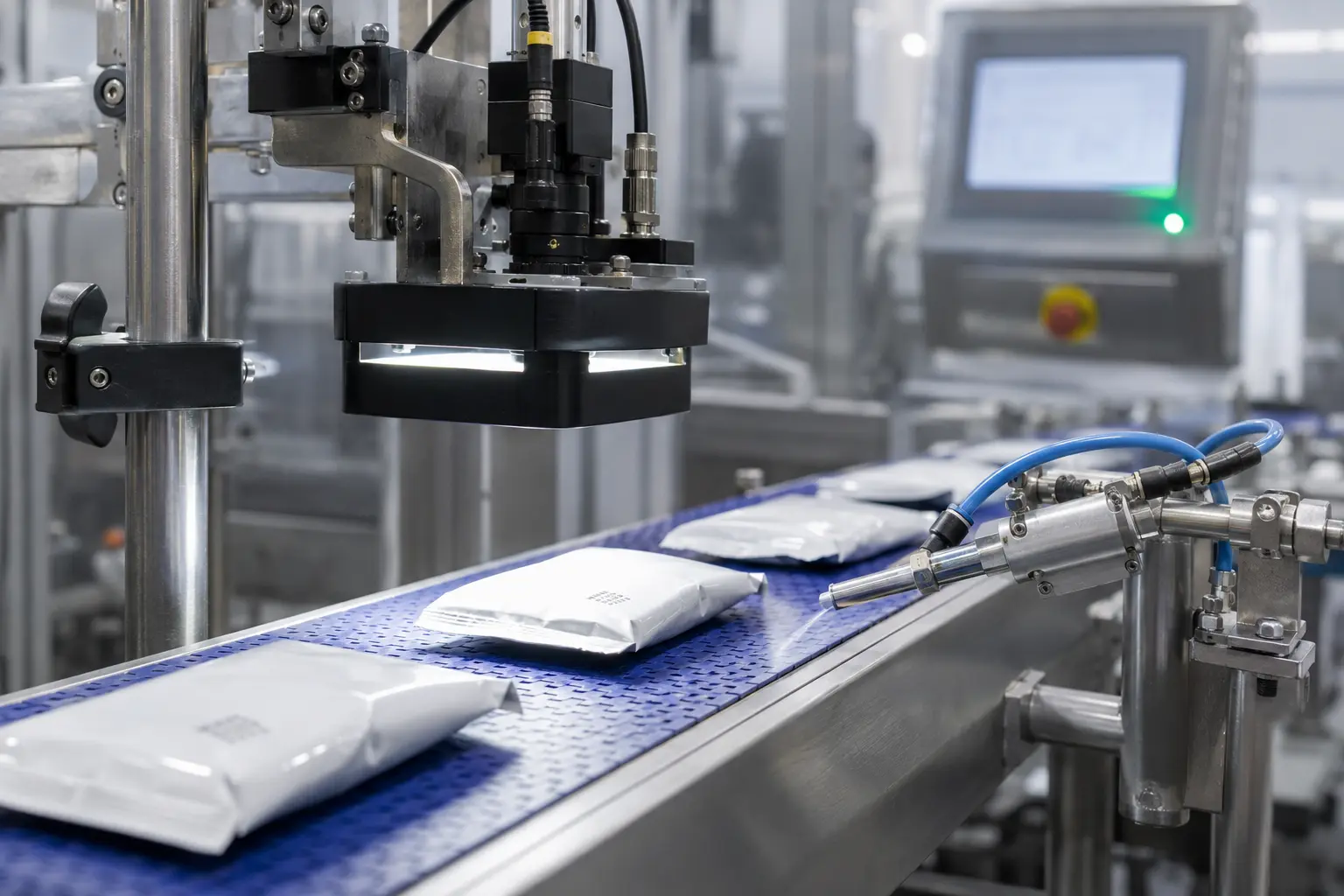 Representative engineered production application
Variable print is time-sensitive and product-specific. The inspection recipe can check date presence, format, position and expected content for inkjet, laser or thermal-transfer codes. OCR reads the printed characters; OCV compares them with an expected value or pattern.
Good imaging depends on controlled presentation, lighting and focus. We develop the inspection and reject station together so the decision remains linked to the correct product even where the printer, camera and reject point are separated along the conveyor.
How our integration works →The final inspection capability depends on the selected equipment, product presentation and agreed acceptance criteria. Sample trials are used where practical.
Purpose-designed lighting, camera position and product presentation improve repeatability.
Expected date, format and code rules are managed with the product setup.
Failed packs are tracked to a suitable reject device with optional verification.
Product samples, line drawings and a short production video help us identify the best next step.
OCR reads characters and returns data; OCV compares the observed print with an expected character or string. The right approach depends on the control objective.
Yes. Expected values can be recipe-based, entered by an authorised operator or provided through an agreed production interface.
Yes. Trials confirm the best camera, lens, lighting and image settings for the substrate and print method.
Start with your product and line
Send us your line speed, product dimensions, inspection equipment and a short production video. We will help define the right reject method and controls.
Share the product, throughput, inspection trigger and available conveyor space. We’ll help identify a practical next step.
Request a line review →01865 416657