X-ray decisions & verified rejection
Automatic reject systems for X-ray inspection machines
Preserve the integrity of each X-ray decision from the inspection tunnel to the reject bin. Our systems control product transfer, tracking, removal and confirmation.
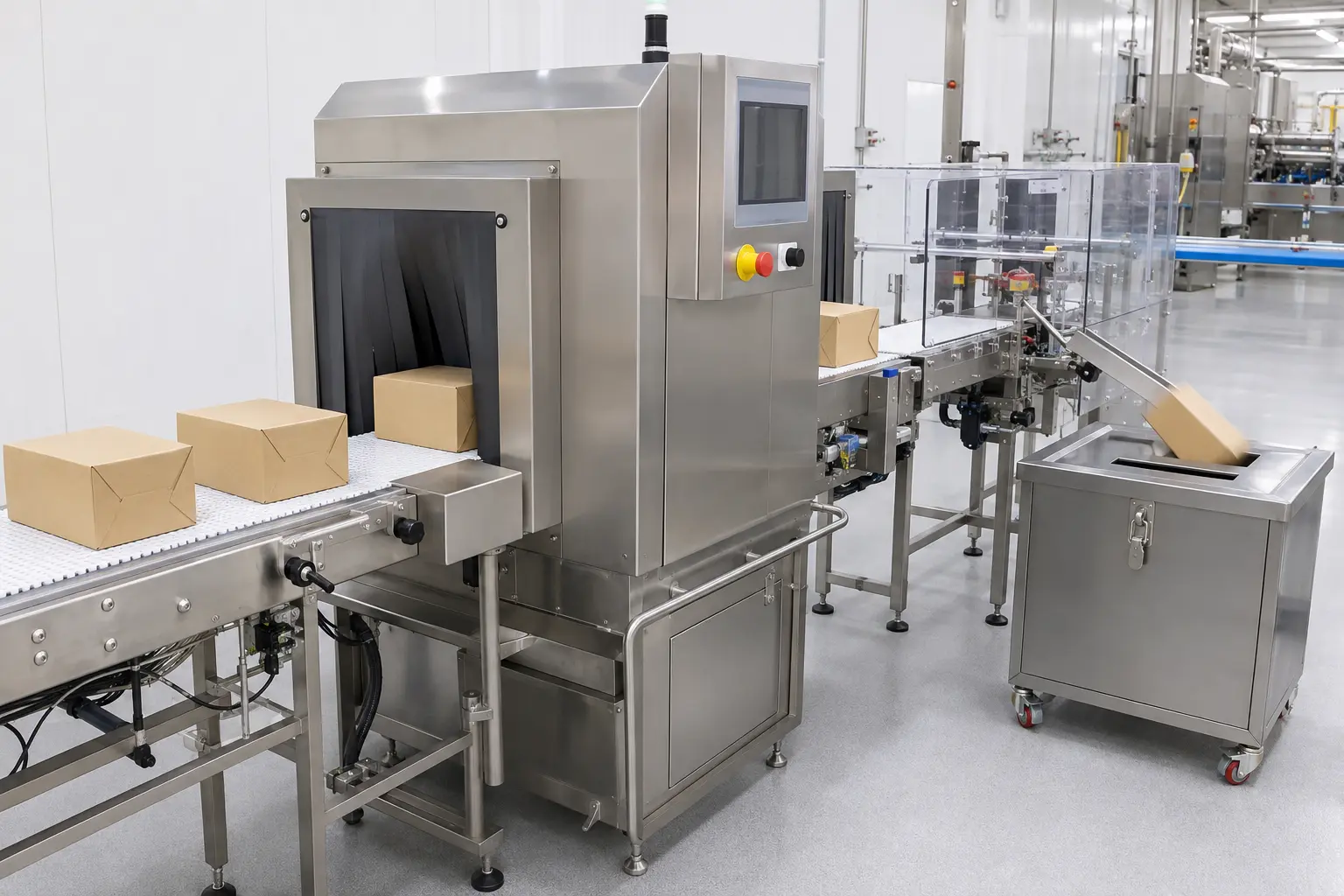 Representative engineered production application
The inspection result is only useful when the right product leaves the line.
X-ray systems may identify dense contaminants, product damage, missing components, fill-level problems or mass inconsistencies. The downstream handling must remove the correct item while avoiding pack instability, jams and accidental displacement of adjacent good products.
We define the reject envelope across every product format and line speed, then select the mechanism and sensing arrangement. Where the quality process requires it, failed products are contained in a lockable bin and the rejection is independently verified.
How our integration works →Decisions the reject system can act on.
The final inspection capability depends on the selected equipment, product presentation and agreed acceptance criteria. Sample trials are used where practical.
Specifying the X-ray result, tracking and reject sequence
An X-ray inspection result and a confirmed reject are different events. The inspection machine decides whether a pack meets its configured checks; the handling system must keep that decision attached to the same physical pack until removal is confirmed. Specify both stages before comparing a complete inspection line.
Which X-ray checks need proving on your product?
Detection depends on the product, its thickness and presentation, the packaging and the selected inspection technology. A successful test on one format does not establish the same sensitivity on another. Separate foreign-material challenges from missing-component, fill or other integrity checks, and agree an acceptance method for each required check. Do not treat an X-ray pass as proof of every possible packaging defect.
What information must cross the machine interface?
- Pack identity in the sequence: agree the trigger point, the result timing and how a late, duplicate or missing result is handled. A simple fail pulse needs a clear relationship to the pack that caused it.
- Movement between inspection and rejection: record the distance, transfers, minimum pack gap and possible speed changes. Check whether encoder tracking or controlled spacing is required; timing based on one constant speed may not describe a changing line.
- Permission to keep feeding: define the response when the X-ray system is not ready, the reject station is unavailable or the receiving line stops. Include what happens to packs already between the inspection and reject points.
- Removal confirmation: define the expected confirmation window and distinguish a commanded movement from evidence that the failed pack entered the reject area.
A useful acceptance sequence includes adjacent packs
Plan controlled trials with good packs before and after an agreed challenge pack, followed by consecutive challenge packs. Record which packs were rejected, which continued, whether the confirmation events matched and whether any pack tipped or struck its neighbour. Repeat the agreed sequence at relevant operating conditions and after a format change. The purpose is to test the complete sequence, not only to demonstrate that a reject actuator moves.
Document expected responses to a missing confirmation, full reject area, lost tracking signal and restart after a stop. Fault simulation must use the equipment supplier's authorised test method and the site's safe procedures. The final design should define how held product is identified and released after a fault; an alarm reset alone does not explain the status of that product.
Prepare the integration review
Bring the X-ray supplier's interface description, an annotated conveyor layout, pack dimensions and weights, the required inspection checks and examples of acceptable and unacceptable packs. Record who owns each signal and the acceptance decision. Compare reject mechanisms for the pack and reject confirmation and fault monitoring, then use the X-ray integration enquiry to describe the actual line.
Typical products and production applications.
Before we design the reject station.
Product samples, line drawings and a short production video help us identify the best next step.
Can you integrate different X-ray machine brands?+
Generally, yes, subject to an agreed reject interface and the machine supplier making the required signals available.
Which products can be rejected?+
The method is engineered around the pack. We handle pouches, cartons, containers, trays and cases across a wide range of weights and speeds.
Can the system stop after a failed reject?+
Yes. A fail-safe response can be programmed where reject confirmation is missing or another monitored condition becomes unhealthy.
How does an X-ray inspection reject system work?
The reject controller receives the X-ray pass or fail result, tracks the affected pack to the reject point, removes it and confirms the removal. A fail-safe system alarms or stops the line when tracking, air pressure, bin security or reject confirmation is lost.