UK engineering for inspection, verification and rejection
01865 416657sales@oxfordvisionsystems.co.uk

Reject method comparison

Reject system types compared.

Air blast, pusher, sweep arm, lane diversion, drop flap and retracting belt—what each method does and which production variables change the answer.

Engineering guide · Updated 26 August 2026

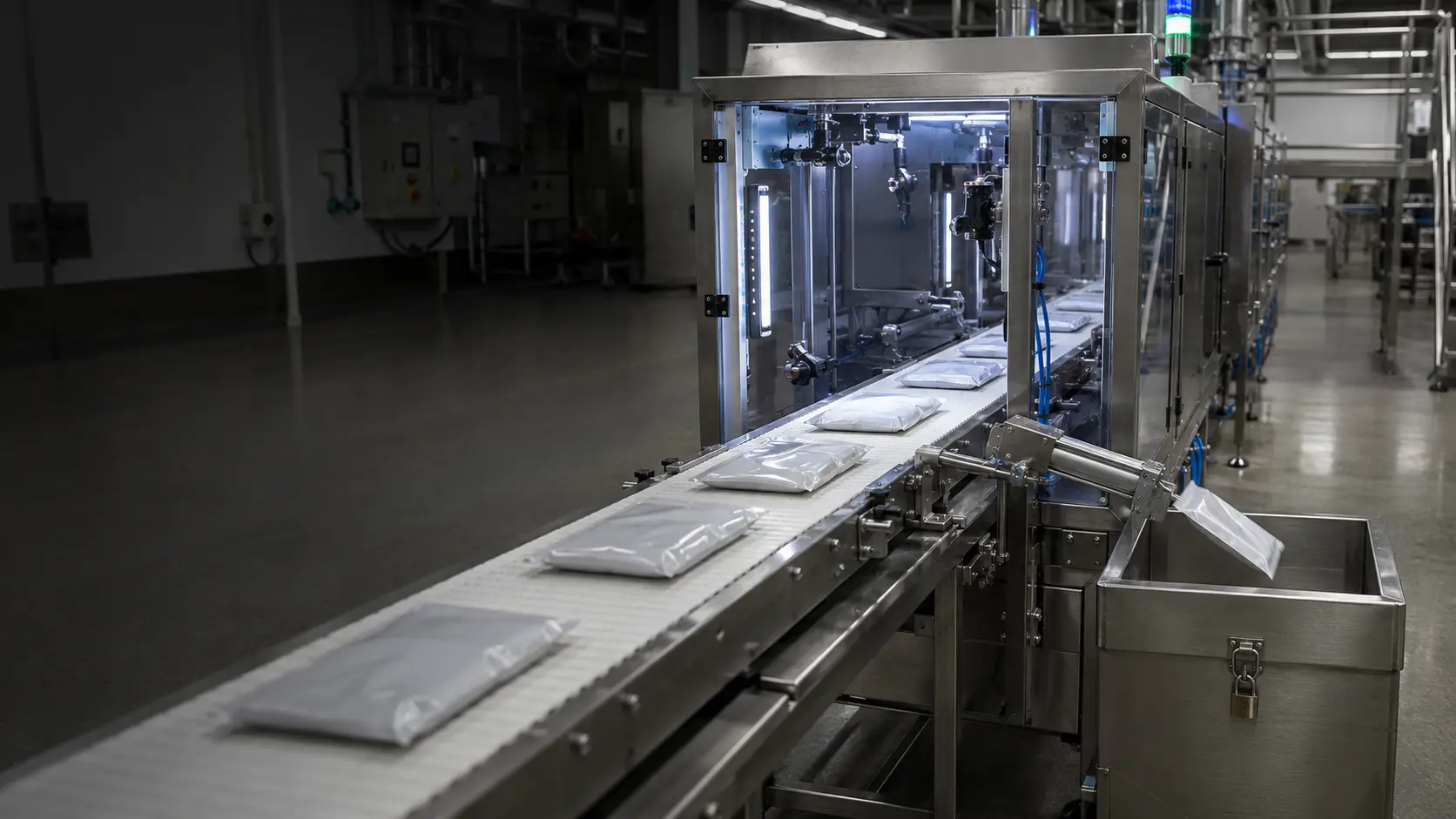
Automatic rejection station on a fast production conveyorSelection starts with the real product

Which automatic reject method should you choose?

Direct answer

Choose the method from the product’s weight, stability, fragility and spacing, then check it against line speed, available conveyor length, reject destination and the consequence of a failed reject. Product trials are advisable where behaviour is uncertain.

No reject mechanism is universally best. A light, sealed sachet may respond well to an air blast; a stable carton may suit a pneumatic pusher; fragile or closely spaced packs may benefit from a controlled diverter; and compact products on a suitable conveyor can be removed through a drop flap or retracting section.
Quick comparison

Match the motion to the product and line.

This table is a starting point, not a final design rule. The complete product range and worst operating condition still need review.

Comparison of common automatic reject system types
Reject typeTypical starting pointKey checksCommon destination
Air blastSuitable lightweight packs at controlled pitchSurface area, air supply, pack stability, adjacent productsChute or guarded catch area
Pneumatic pusherStable cartons, containers and packs that tolerate contactMass, cycle time, stroke, guide rails, recovery timeSecure bin or side conveyor
Sweep arm / diverterProducts needing more controlled lateral redirectionProduct length, pitch, entry angle and lane widthReject lane or rework conveyor
Drop flapCompact, stable products with suitable conveyor geometryAvailable drop zone, flap timing, transfers and guardingBin or chute below
Retracting beltApplications needing a rapid controlled gapProduct length, belt speed, fall path and mechanism cycleBin or chute below
Stop and alarmProducts that cannot be safely ejected automaticallyLine clearance, operator response and quality procedureManual controlled removal
Detailed options
01 / NON-CONTACT

Air-blast reject system

A timed compressed-air jet moves a suitable product laterally. It can be fast and mechanically simple, but needs adequate product surface area, predictable spacing, controlled air pressure and a defined catch path. Very heavy, open, unstable or easily disturbed packs may be poor candidates.

02 / POSITIVE LATERAL MOTION

Pusher reject system

A guided face extends across the conveyor to move a product into a chute, bin or parallel conveyor. It provides positive contact and can suit stable products, but the stroke and return must complete before the next product reaches the reject zone.

03 / CONTROLLED REDIRECTION

Sweep arm or lane diverter

A moving guide redirects the product over a longer path. This can reduce impact and create separate reject, rework or sample lanes. Product length, entry angle, guide-rail position and close pitch are important.

04 / DOWNWARD REMOVAL

Drop-flap reject system

A conveyor section opens so the failed product falls into controlled containment below. The product must cross the opening cleanly, while the flap geometry, cycle time and guarding must suit the complete range.

05 / HIGH-SPEED GAP

Retracting-belt reject system

A belt or conveyor nose retracts to create a timed gap. This can suit products that need quick downward rejection, but it adds mechanical movement and needs enough time to reset without disturbing accepted flow.

06 / CONTROLLED RESPONSE

Stop-and-alarm rejection

Automatic ejection is not always appropriate. If the product is too large, unstable or hazardous, the safer quality response may be to stop the line, identify the failed item and require authorised manual removal.

Selection criteria

Test the worst case, not only the easiest product.

PRODUCT

Size, mass and behaviour

Include the smallest, largest, lightest, heaviest and least stable variants, plus surface friction, liquid movement and fragile features.

THROUGHPUT

Speed, pitch and reject rate

Give the real operating range, minimum gap, speed changes, consecutive rejects and any accumulation near the inspection point.

QUALITY RISK

Containment and verification

Define where rejected product must go, who may access it and how the system should respond when removal is not confirmed.

Selection questions

Air blast, pusher or another method?

Final selection should be based on representative products and the actual line envelope.

What is the difference between air blast and pusher rejection?+

An air blast uses a timed jet of compressed air and is normally considered for suitable lightweight products. A pusher uses a guided mechanical face and gives positive lateral movement for products that can tolerate contact.

Which reject system is best for heavy products?+

A correctly sized pusher or controlled diverter is often considered, but weight is only one factor. Stability, contact surface, pitch, line speed, available space and destination also matter.

Which reject method works at high speed?+

There is no single high-speed answer. Air blast or retracting-belt systems may suit some applications; closely pitched or unstable products may need controlled diversion or changes to upstream product handling.

Can one system handle several pack formats?+

Often, yes, if all formats remain within the designed operating envelope. Change parts, adjustable guides, recipes, timing parameters and challenge tests may be needed for reliable changeover.

Unsure which method fits?

Show us the product
moving at production speed.

A short video, dimensions, throughput and the intended reject destination provide a useful starting point for selection.